Showing posts with label Vietnam. Show all posts

Sunday, August 1, 2021

Reader Questions: Is PTSD Treatable?

Dear Virginia, 

I am a Veteran who served in Vietnam class of 68/69. My MOS was 8404 or fleet marine force Navy Corpsman attached to the US Marines. I also lead a support group for Veterans. I am in the process of reading your book and using it to stimulate conversations. Your book is aimed at younger Veterans and rightfully so. You say you can be cured. Two questions: first what is your interpretation of cured? The second is what about us older Veterans who held it in and practiced PTSD for 30-40 years? 
Thank You in advance.

Rich Jakubczak “Doc Jake“

Dear Doc Jake,

Thank you for taking the time to reach out to me; I value hearing from you. This is an opportunity to discuss what treatment can do and what it can't.

I'm going to start with the latter. Treatment does not mean that we will forget about our traumatic experience. I understand that this is our wish though, and I get it. Who wants to remember losing a buddy, being raped, being trafficked, or any number of traumatic events? Unfortunately, treatment for PTSD does not erase our memories. 

The purpose of treatment for PTSD is to reduce our symptoms. Intrusive memories, nightmares, avoidance, and hypervigilance can get to a point where they affect our walking, talking everyday lives — and we're not able to function the way we once used to. "Cured" means that our symptoms reduce to the point where we can function in our roles again effectively. 

The goal of treatment is not to change the past (I wish we could do that, but it's not a thing), but to get our symptoms under control to the point where they no longer screw with us daily. We can reclaim our lives and function in our roles — as a parent, a friend, an employee, a brother, or a battle buddy. 

I am especially thankful for your second question, especially because it is not something I thought to address directly in the book and I think it's important. YES, I have personally worked with my brothers and sisters who served during the Vietnam era, and they have experienced incredible success in reducing their PTSD symptoms; it is damned inspiring. 

Evidence-Based Treatments (EBTs) like prolonged exposure, cognitive processing therapy, and EMDR work for chronic PTSD. The data are clear; whether we've been dealing with our PTSD for five years or 50, EBTs work. 

The hardest part of treatment for chronic PTSD is answering the first of the Big 2 Questions: "Do I believe that I can recover from my PTSD, even if I've been carrying it for decades?" 

I know that recovery is possible for Vietnam-era Vets because the research is clear and because I have seen it myself. In your support groups, I imagine that you get to see some incredible breakthroughs as well. The bottom line is that YES — recovery is absolutely possible, and EBTs make it damned likely. 

THANK YOU, Doc — your continued service as a peer support group leader and leader in your community is inspiring.

Virginia


*****

If you believe change is possible, you want to change, and you are willing to do the work, you absolutely CAN get your life back.”

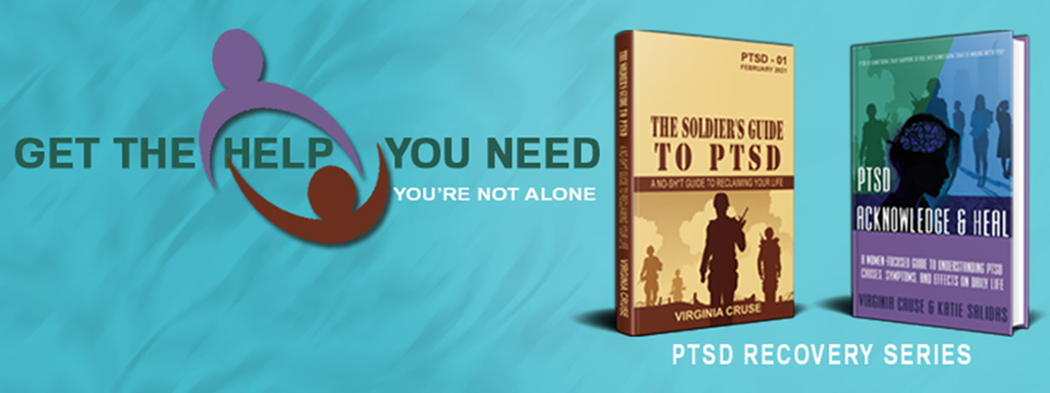
Get your copy of The Soldier's Guide to PTSDThe Soldier's Workbook

or Acknowledge & Heal, A Women's-Focused Guide to PTSD


Thursday, July 15, 2021

A Note to Our Vietnam-Era Veterans

As I've talked with readers, I have most enjoyed the opportunity to connect with our Vietnam-era Veterans. I did not expect that our book would have an impact on this community, and it's been a joy to hear the candor and enthusiasm. 

For me, this connection has taken an extra meaning; it is personal. My Dad was a Vietnam Vet and he died in 2019. He didn't talk a lot about his experience, but I know that his deployment haunted him until the day he died. 

When I was going through the worst of my own combat-related PTSD, my Dad was the only one who "got it" and didn't press me. We never discussed it, and I regret that now. If there is one thing I would want to have told him, and that I will now tell you, it is this:

When you came home from Vietnam, you were spit on, disparaged, denied civilian work, and very actively bullied. I can't even imagine what that was like after surviving suck a total cluster of a deployment. What happened to you is not okay and it is absolutely inexcusable.

I recognize that our Vietnam Vets are the very reason that my battle buddies and I were able to redeploy and be welcomed at the airport by my family and loved ones. Complete strangers cheered for us at the airports and gave us food and coffee; I saw your hats and your biker vests and your tee shirts, though — you were not strangers. I know it was our Vietnam Veteran brothers and sisters who ensured that this wrong was not repeated. I am very deeply thankful for that and I get choked up to this day remembering that. 

The second thing I would want to have said is that treatment is for you, too. The data are clear that evidence-based treatments work for Vietnam Veterans with chronic PTSD. Even if you have been experiencing symptoms for decades, the data show that it is never too late to reclaim your life.

You allowed us to come home, and you were the first to extend a hand in solidarity. If I had a wish for you it would be that you get the help you need to reclaim your life — because you are worthy of being whole. 

Bangor, Maine 2003 — Maine Troop Greeters: I have never forgotten you. Read more about this amazing group at http://themainetroopgreeters.com/getting-to-know-us/maine-troop-greeters-mission-statement/


Saturday, July 10, 2021

Experiencing PTSD in Retirement and "Can I Recover After Decades of PTSD?"


There is nothing I enjoy more than hearing from readers, and it's been a privilege to hear from our Vietnam-era Veterans and their family members. The number one question that I'm hearing from Vietnam-era Veterans is, "can I recover from PTSD even if I've been dealing with my symptoms for decades?"

The answer is unequivocally yes. The data are clear that evidence-based treatments work for Vietnam-era Veterans with chronic post-traumatic stress. To access studies, I recommend that you do a Google Scholar search with the terms Vietnam Veterans, PTSD treatment, and National Institutes of Health.

But I think it's important to scratch below the surface on this topic and talk about why PTSD symptoms can increase with age. This is going to be uncomfortable, but it's important:
  • Criterion C of PTSD is avoidance, and this means that we will go way out of our way to avoid anything that reminds us of our traumatic experiences. When we retire from work or are done with child raising responsibilities, we have a lot more bandwidth and time to think. We also have fewer distractions from memories. 
  • As we age, sometimes we experience medical problems that make us feel like we're not as strong as we once were, and this feeling of vulnerability can unexpectedly trigger our PTSD symptoms. 
  • When we get older, a lot of us put down alcohol and drugs. Unfortunately, this can be a go to coping mechanism for our PTSD symptoms. If we don't have another healthier way of coping to replace drugs or alcohol, it can make our PTSD symptoms seem worse.

If you're experiencing PTSD symptoms for the first time in retirement, you're not going crazy or senile. Unfortunately, this is not uncommon. Here's what I need you to know: it's never too late to get help for chronic PTSD. 

Evidence-based treatments, like prolonged exposure, cognitive processing therapy, and EMDR, have been clinically proven to help, and there are more resources available than ever thanks to our Vietnam Veterans who ensured that Vets of the current era weren't screwed over the way they were. 

I encourage you to learn more about your PTSD symptoms and available treatments. We've created a Free Workbook to help you identify your symptoms so that you can make an informed decision to reclaim your life from PTSD and Moral Injury.