Showing posts with label Treatment. Show all posts

Friday, August 18, 2023

Calling a Mental Health Therapist


Once we find a therapist, we can call and request a phone consultation with them. Keep in mind that we may call and leave messages with several providers but only hear back from a few. (Therapists can be crappy this way.) 

During the phone consult:

·         Briefly explain why we are seeking therapy

·         Ask what experience they have treating clients like us

·         Ask if they are trained in evidence-based treatments for PTSD/Moral Injury 

This may sound like, “I’m trying to cope with the trauma and fallout of my abusive marriage. What kind of treatment do you use for PTSD?” 

If the therapist does not have training in an evidence-based treatment for PTSD, ask them if they can recommend someone who does. 

Next, we’ll make our first appointment. It’s okay to feel nervous; in this first session, we are getting to know the therapist and trying to determine if it is a relationship that will last. 

It also might not be. Not all therapists are compatible with all clients, and that’s okay. The relationship between a client and their therapist is important; we need to feel a sense of trust with our therapist in order to improve. 

Some therapists are unprofessional or simply not good at their jobs. We’re not trying to be ugly; it is what it is. If you don’t click with your therapist, it’s not necessarily you. Keep looking - there is excellent advice online about how to choose the best therapist. 

Having a therapist we can trust is an important cornerstone for our social support network and is vital to our recovery.

Do you know other ideas? If so, please reach out and let folks know on our Community Facebook Page.

*****

If you believe change is possible, you want to change, and you are willing to do the work, you absolutely CAN get your life back.”

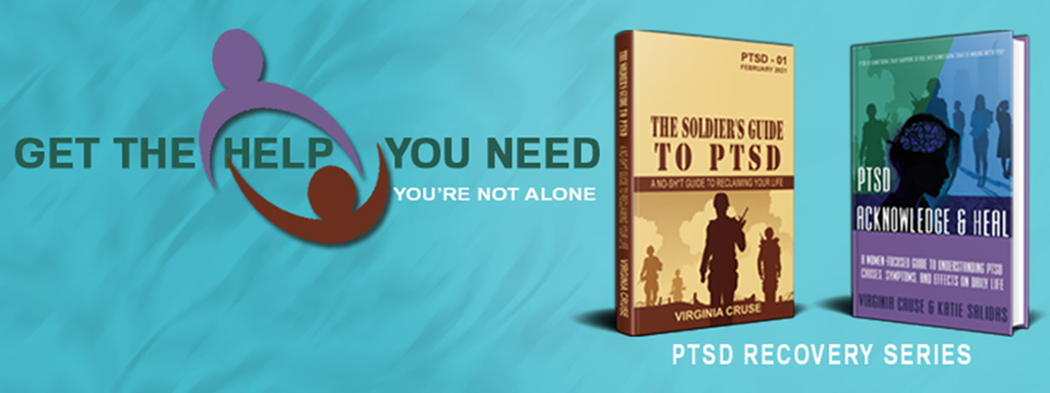
Get your copy of The Soldier's Guide to PTSDThe Soldier's Workbook

or Acknowledge & Heal, A Women's-Focused Guide to PTSD

Friday, May 19, 2023

If What We're Doing Isn't Working, What Next?

When it comes to military PTSD and suicide, one thing is clear. What we are doing is not working.

Two data points from June 2021 immediately jump to mind and I've linked the studies to our Facebook page and in this post. According a 17 June 2021 survey, 35% of military connected individuals believe that PTSD is not treatable. This is a disappointing but not surprising outcome.

Also under the heading of disappointing but not surprising, the cost of war project at Brown University released a study on June 21st 2021 that more than four times the number of soldiers killed in combat have taken their own life through suicide since 9/11.

We've been talking about veteran suicide and PTSD for over a decade. PTSD awareness now has its own month in June, we have Master Resiliency Training, and every year I see people doing 22 push-ups on their Facebook pages military suicide awareness. Every year. For the last 10 years.

Albert Einstein said "No problem can be solved by the same consciousness that caused it." A simpler version of this, which I use every day, is "insanity is doing the same thing over and over again and expecting different results."

So what can we do differently? Here are my humble suggestions:
  1. Identify the problem. Discuss the facts about PTSD in a language that Service Members — and anyone else — can understand. PTSD is an incredibly logical disorder, and we don't need to have a PhD to understand it. 
  2. Discuss the courses of action. PTSD is completely treatable. As of this recording, there are three evidence-based treatments that are approved by the VA: prolonged exposure, cognitive processing therapy, and EMDR. They work for most people most of the time, whether you have been dealing with symptoms for 5 years or 5 decades. 
  3. Take action. Understand your symptoms, advocate for yourself, and ask for evidence-based treatments by name.

I encourage you to learn more about your PTSD symptoms and available treatments. We've created a Free Workbook to help you identify your symptoms so that you can make an informed decision to reclaim your life from PTSD and Moral Injury.

*****

If you believe change is possible, you want to change, and you are willing to do the work, you absolutely CAN get your life back.”

Get your copy of The Soldier's Guide to PTSDThe Soldier's Workbook

or Acknowledge & Heal, A Women's-Focused Guide to PTSD

Friday, December 30, 2022

New Year, New You : Evidence-Based Treatments & Why They Matter


A New Year is coming fast, and maybe you are thinking that this is the year to get help for your PTSD. Awesome! Let's talk about how to get help.

It's likely that you've received lots of unsolicited advice on how to best handle your PTSD symptoms, and it's possible that this advice was not completely helpful. Most people aren't being malicious when they say, "you just need to PT more" or "just cut out gluten" to fix your PTSD, but often this is one person's opinion or personal experience rather than a no-kidding solution based in sound science.

Blogs and books? Those are often opinions, too. According to Norcorss et al. (2013) self-help books appear at a rate of 5,000 per year, and 95% of them are published without any research documenting their effectiveness. So how do we know what is based in science and what is a gift from the Good Idea Fairy?
Evidence-based treatments (EBTs) are based on peer-reviewed scientific evidence. This means that researchers have conducted rigorous studies using scientific methods, documented their extensive research in peer-reviewed publications (such as medical journals), and then other researchers conduct additional scientific studies to see if the treatment is, in fact, successful.
There are three EBTs approved by the VA for treatment of PTSD at this time: Prolonged Exposure (PE), Cognitive Processing Therapy (CPT), Eye-Movement Desensitization and Reprocessing (EMDR) - and the data are clear: they work. There are other EBTs for PTSD, but, because these three are supported by the VA, they tend to be widely available. Moreover, the data indicate that they work for the long-haul.
While PTing more and eating better is always a good idea, when it comes to beating your PTSD symptoms, EBTs are proven to work and they do so in about 12 sessions.
Don't give up - get smart. You know you better than any treatment team and you deserve your breakthrough. Start your research journey and ask your treatment team for smart solutions. We can find an EBT provider through the Strong Star Provider Network at University of Texas Health Science Center or even through Psychology Today or Google.

Have you tried an EBT? What worked for you? We value your feedback and ideas! Reach out on our Community Facebook Page!

*****

If you believe change is possible, you want to change, and you are willing to do the work, you absolutely CAN get your life back.”

Get your copy of The Soldier's Guide to PTSDThe Soldier's Workbook

or Acknowledge & Heal, A Women's-Focused Guide to PTSD