Showing posts with label Symptoms. Show all posts

Sunday, August 14, 2022

Thinking of Suicide? Read This First

Suicidal thoughts are an unbelievably normal part of PTSD. Normal doesn't mean that they are pleasant; it just means that we can expect this with PTSD - and we need to talk about it because it is the norm and not the exception. 

Listen, I am not trying to read you. I’ve experienced this myself and I’ve literally heard this a thousand times with clients. 

But if you’re feeling this way right now, put everything away and read this: Suicide: the Forever Decision by Paul G. Quinnett, PhD. It’s available for free in PDF and there are several places to download the PDF for free. Dr. Quinnett was brilliant, and I highly recommend it. It saved my life.

You are important - your life is important. If you are looking for a sign, here it is: please reach out.

Also, let's remember our friends at the Veterans Crisis Line. They are there to help and they care. Call 1-800-273-8255 and Press 1 or text 838255. You can also call 911 or go straight to the emergency room. 

Bottom line is that once we're better, we can reach out to get the help we need. 

We want to hear from you and value your feedback and ideas! Reach out on our Community Facebook Page!

*****

If you believe change is possible, you want to change, and you are willing to do the work, you absolutely CAN get your life back.”

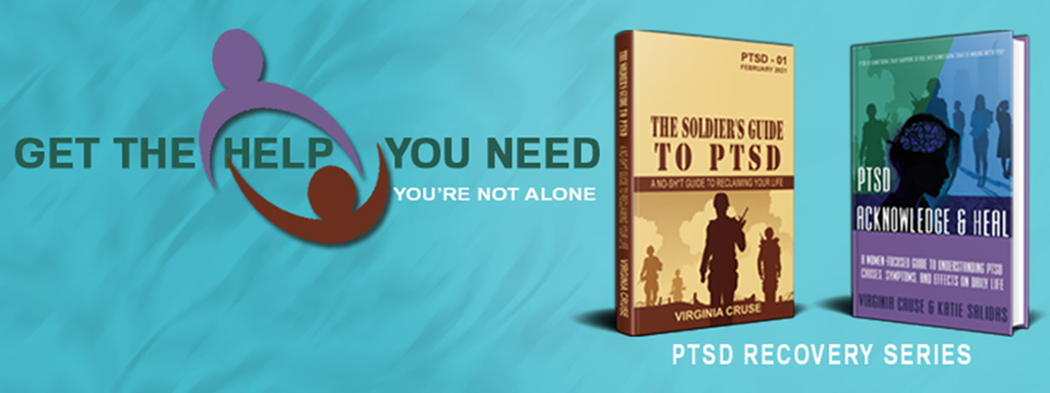
Get your copy of The Soldier's Guide to PTSDThe Soldier's Workbook

or Acknowledge & Heal, A Women's-Focused Guide to PTSD
Friday, May 6, 2022

Trauma Reactions: Fight, Flight, and Freeze

Fight or flight. We hear this all the time, but freeze is the red-headed step-child of trauma. Fight, flight, and freeze are all normal neuro-biological responses to fear, but, if we don’t know this, we can feel guilty or angry or like we “let it happen” when our body freezes in the face of trauma. 

First, let’s wipe out the fantasy that we have a choice whether our body goes into fight, flight, or freeze - because that’s not a thing. When we’re in danger, our brain kicks into high gear and takes over to protect out life. You do not get a choice; in a split second your brain makes the choice for you. 

Think about those nature shows where lions are hunting gazelle-snacks. No gazelle is going to get its back up and whoop some lion’s ass, so he’s left with two choices: flight or freeze - and both of these are legit survival methods. The eye sees what is moving (“I’m up, they see me, I’m down”) so a lion may not notice the stock-still gazelle frozen right next to him. The folks who design military training know this and we go to great measures to train the freeze out of us. Live-fire exercises, rote memorization questioning techniques, fire and movement - we do this training over and over again so that our brain passes over freeze and jumps into habit under fire. But no one trains us how to get raped, or how to hold a buddy while they die, or how to respond when we see a detainee get schwacked. That is not a thing, my friends. There is no fighting back, there is no running away; we freeze. 

The degree of self-blame that comes with freeze is overwhelming. Sometimes we have this fantasy that, “if I didn’t freeze, everything would have been different,” or “if I didn’t freeze, I could have fought back.” 

I say this with love: it’s possible that you’re wrong. Freeze is not a choice; your brain took over and kept you alive.

Bottom line is that you deserve to get your life back, and there are therapy treatments (like Prolonged Exposure Therapy, Cognitive Processing Therapy, and EMDR) that are designed to help you with your symptoms. You can do this.

*****

If you believe change is possible, you want to change, and you are willing to do the work, you absolutely CAN get your life back.”

Get your copy of The Soldier's Guide to PTSDThe Soldier's Workbook

or Acknowledge & Heal, A Women's-Focused Guide to PTSD

Saturday, July 10, 2021

Experiencing PTSD in Retirement and "Can I Recover After Decades of PTSD?"


There is nothing I enjoy more than hearing from readers, and it's been a privilege to hear from our Vietnam-era Veterans and their family members. The number one question that I'm hearing from Vietnam-era Veterans is, "can I recover from PTSD even if I've been dealing with my symptoms for decades?"

The answer is unequivocally yes. The data are clear that evidence-based treatments work for Vietnam-era Veterans with chronic post-traumatic stress. To access studies, I recommend that you do a Google Scholar search with the terms Vietnam Veterans, PTSD treatment, and National Institutes of Health.

But I think it's important to scratch below the surface on this topic and talk about why PTSD symptoms can increase with age. This is going to be uncomfortable, but it's important:
  • Criterion C of PTSD is avoidance, and this means that we will go way out of our way to avoid anything that reminds us of our traumatic experiences. When we retire from work or are done with child raising responsibilities, we have a lot more bandwidth and time to think. We also have fewer distractions from memories. 
  • As we age, sometimes we experience medical problems that make us feel like we're not as strong as we once were, and this feeling of vulnerability can unexpectedly trigger our PTSD symptoms. 
  • When we get older, a lot of us put down alcohol and drugs. Unfortunately, this can be a go to coping mechanism for our PTSD symptoms. If we don't have another healthier way of coping to replace drugs or alcohol, it can make our PTSD symptoms seem worse.

If you're experiencing PTSD symptoms for the first time in retirement, you're not going crazy or senile. Unfortunately, this is not uncommon. Here's what I need you to know: it's never too late to get help for chronic PTSD. 

Evidence-based treatments, like prolonged exposure, cognitive processing therapy, and EMDR, have been clinically proven to help, and there are more resources available than ever thanks to our Vietnam Veterans who ensured that Vets of the current era weren't screwed over the way they were. 

I encourage you to learn more about your PTSD symptoms and available treatments. We've created a Free Workbook to help you identify your symptoms so that you can make an informed decision to reclaim your life from PTSD and Moral Injury.

Monday, June 7, 2021

Spreading the Word: Moral Injury & PTSD


Recently, I had the opportunity to talk with Ben Killoy on the Military Veteran Dad Podcast, and we spoke at length about Moral Injury.

When I first came upon research on Moral Injury by Brett Litz and his team, I was floored. I thought, how is it that no one is talking about this? That included other psychotherapists like me.

Ben and I spoke at length about how the difference between PTSD and Moral Injury. PTSD is rooted in fear—our brain performs mental acrobatics in order to keep us alive. Moral Injury, however, feels more nefarious because it is rooted in shame—it stems from events that violated our own deeply rooted expectations of ourselves and others. 

Moral Injury is born in the “should”—how someone “should be” treated or how things “should work”—in war and in life. These are the things we (or others) did or didn’t do—the things we can’t unfuck.

Research on Moral Injury tidily puts these into three categories: combat loss, perpetration, and leadership betrayal. We spoke at length about these three categories and what Evidence-Based Treatments help.

After the podcast, both Ben and I heard from several of his listeners. They expressed their surprise that Moral Injury is not a topic more widely discussed and were extremely thankful that we broached the topic.


One of these interactions has really stuck with me this week. A Silver Star recipient took the time to connect with us on our Facebook page. It was an honor to learn about his story and to know that, after listening, he has discovered a new tool to unlock his combat trauma. 

No one becomes a mental health provider for the money or the fame - but knowing that other Veterans are impacted by our work is far more valuable. Ben and I decided that we will do it again. This time, to really engage with our audiences, I’m reaching out to you. I want your ideas, feedback, and to know the questions you want answered.

Send your questions and feedback to me ContactUs@thesoldiersguide.com

Or, post your comments on my Facebook Page HERE

This is our Mission: a call to arms offering facts, empathy, and step-by-step instruction for Service Members to get the help they need, help family members to understand the battlefield, and connect civilians with a Warrior culture.

THANK YOU for caring about what we are doing and spreading the word about PTSD, Moral Injury, and recovery. Stay tuned for updates so you don’t miss this podcast when it goes live.

*****

If you believe change is possible, you want to change, and you are willing to do the work, you absolutely CAN get your life back.”

Get your copy of The Soldier's Guide to PTSDThe Soldier's Workbook

or Acknowledge & Heal, A Women's-Focused Guide to PTSD


Sunday, May 30, 2021

How to Call In a Health and Welfare Check for a Battle Buddy

How to Request a Welfare Check for a Battle Buddy (TL;DR below)

Team, Monday is going to be hard. It's Memorial Day and our Facebook feeds will be full of pictures and tributes to those we've lost to combat and to suicide. A lot of us will seriously consider suicide this weekend.

Please conduct your buddy checks this weekend, and nag the crap out of the people you love. Ask directly: "are you thinking of suicide right now?" - this doesn't glorify suicide or give anyone ideas, but it does get straight to the point, and this weekend especially candor is important.

If you learn that your Battle Buddy is in trouble, here's two ways to get help:

(1) Call the Veterans Crisis Line at 1-800-273-8255 and Press 1 or send a text to 838255. You can text the crisis line while you are on the phone. **Ask you buddy where they are located, who is with them, and whether or not they have a weapon.** Pass this info on to the crisis line; they will send emergency services.

(2) Request a Health and Welfare Check. Let's say your buddy is not in imminent danger of hurting themselves, but you still don't feel easy about your conversation. We can request that the local PD or sheriff conduct a welfare check to make sure they are okay. To do this:
(a) contact the local PD or sheriff NON-emergency line,
(b) let the dispatch know that you are requesting a welfare check for a Veteran with PTSD,
(c) provide your info and your Battle's name, address, and phone number,
(d) if your buddy has a weapon, let them know.

I have called in many health and welfare checks over the years, as a mental health professional and as a friend. My experience has been this: uniformed officers went to the home and let the Veteran know that a friend was worried about them. The officers get eyes on the Veteran and ask how they can help. Most of the time, the Veteran gets it and it's a non-issue. Sometimes, they get pissed that I sent the cops. Either way, they are breathing.

I know that no one wants to piss off their buddy, but no one wants another dead buddy either - so choose your battles. The single most loving thing anyone ever did for me personally was stage an all-out intervention; it saved my life.

TL;DR - Buddy in danger? Call the Veterans Crisis Line at 1-800-273-8255 and Press 1 or send a text to 838255 while on the phone with them to get emergency services dispatched. Want a welfare check? Call the NON-emergency line for the PD or sheriff and ask for one.

IF YOU ARE THINKING OF SUICIDE - stop everything and get help right now. Call a friend, a relative, a neighbor, or the Crisis Line at 1-800-273-8255 and Press 1. We have to stick together right now. -Virginia

*****

If you believe change is possible, you want to change, and you are willing to do the work, you absolutely CAN get your life back.”

Get your copy of The Soldier's Guide to PTSDThe Soldier's Workbook

or Acknowledge & Heal, A Women's-Focused Guide to PTSD

Saturday, May 29, 2021

Buddy Check-Ins on Memorial Day Weekend


Team, this weekend is going to be hard. It's Memorial Day weekend and our Facebook feeds will be full of pictures and tributes to those we've lost to combat and to suicide. And it is hard. I'm not here to force-feed you some rah-rah message about how life can change; I'm here to stand with you - because this weekend consistently sucks every single year and we need each other right now. 

A lot of us will seriously consider suicide this weekend. And I get it. I wish I didn't, but I think we all do - and it's fucking awful to feel this way. Please do your buddy checks this weekend, and nag the shit out of the people you love. Please ask: "are you thinking of suicide right now?" - this doesn't glorify suicide or give anyone ideas, but it does get straight to the point, and this weekend especially that candor is important. 

I've never met a combat-Vet who lost more buddies to war than they did to suicide, and that's not okay. Rather than doing 22 push-ups or whatever people are doing now for suicide awareness, I encourage you to pick up the phone and call someone to check in. 

If you learn that your battle buddy is in trouble, here's how to get help: call the Veterans Crisis Line at 1-800-273-8255 and Press 1 or send a text to 838255. You can text the crisis line while you are on the phone. Ask you buddy where they are located, who is with them, and whether or not they have a weapon. Pass this info on to the crisis line; they will send emergency services. 

I know that no one wants to piss off their buddy, but no one wants another dead buddy either - so choose your battles. The single most loving thing anyone ever did for me personally was stage an all-out intervention; it saved my life. 

Please consider sharing this info. Thanks, Team - stay safe out there. -Virginia

TL;DR: call your battle buddy, ask them directly if they want to kill themselves, get them help.

AND YOU - if you're in this head space, talk to someone now - like right now. Call your buddy, call the crisis line, do whatever it takes to hang on until this feeling passes because the world would not be better off without you.

*****

If you believe change is possible, you want to change, and you are willing to do the work, you absolutely CAN get your life back.”

Get your copy of The Soldier's Guide to PTSDThe Soldier's Workbook

or Acknowledge & Heal, A Women's-Focused Guide to PTSD

Saturday, May 1, 2021

Wanting to "Go it Alone"

"Maybe it's time for you to get some help." Real talk: there is no phrase that packs more oof per square inch than that one. Even when it's well meaning, it can feel like a gut punch - because we already know we need help.   


PTSD is one of those secrets that does not keep well. Even when we don't have a name for it, we know that something is off. Maybe we're getting angry unexpectedly, drinking more, having nightmares, or feeling jumpy. We start to push our loved ones away or self-isolate because we don't want to worry anyone, but the truth is that everybody knows something is up and they are worried. But they don't talk about it. And we don't talk about it. And we all just pretend that it is not a thing. But, it is. 

So when our loved ones finally get up the gumption to suggest that it is time to get some help, it can sting. Especially when "getting some help" means seeing a therapist. 

A therapist. (Insert more oof * here *)

Yes, I know the stereotypes: lying on a couch talking endlessly about your mother, a bespectacled guru encouraging you to heal your inner child, or looking at ink blot after ink blot but all of them just look like your parents fighting. Friend, I hear you, and I know that you would rather go it alone than relive your trauma with a stranger who spent decades in college. So how can we get the help we need to no-shit reclaim our lives from PTSD without having to sift through this horseshit? I'm so glad you asked! 

First things first: there are a lot of therapists out there who haven't jumped head-first into the woo-woo vortex, and I'm here to help you find them. Not all therapists are touchy-feely or use crystals or give two shits about your mommy-issues, and these are usually certified trauma therapists.

Trauma therapists specialize in PTSD and use specific Evidence-Based Treatments (EBTs) to treat PTSD. As of this writing, there are three EBTs for PTSD that are approved by the VA: 

  • Prolonged Exposure Therapy
  • Cognitive Processing Therapy
  • Eye-Movement Desensitization and Reprocessing Therapy (EMDR)

Because these EBTs are endorsed by the VA, they tend to be widely available in Military Treatment Facilities (MTFs), VA clinics, and with therapists in private practice – so I encourage you to ask for these EBTs by name and be insistent. There is no sense in working with a therapist who is not specifically trained in how to treat PTSD; it’s a waste of time and leads to even more frustration.  

Moreover, the data are clear: EBTs work most of the time for most people, and they do so in 6-12 sessions. No lying on the couch for years on end; you can knock this out in a couple months and get on with your life. Or we can continue to go it alone.

To quote Albert Einstein, "No problem can be solved from the same level of consciousness that created it." The fastest way to reclaim our lives is to reach out and get an objective, third-person perspective. Did I mention that it's only 6-12 sessions? This is not forever, friend; time to suck it up. 

To find a trauma specialist, we can get help from Military One Source, look up providers on our health insurer’s website, or use our company’s employee assistance program, or EAP. We can also find therapists on the internet by searching by the name of the evidence-based treatment and with our zip code (for example, “EMDR therapist Tampa 33607”). Psychology Today has a helpful database.

Once we find a therapist, we can call and request a phone consultation with them. Keep in mind that we may call and leave messages with several providers but only hear back from a few. (Therapists can be crappy this way.)

During the phone consult:

  • Briefly explain why we are seeking therapy
  • Ask what experience they have treating clients like us
  • Ask if they are trained in Evidence-Based Treatments for PTSD

This may sound like, “I was in the military and experienced some bad stuff during a deployment to Afghanistan. What experience do you have helping Soldiers like me? What kind of treatment do you use for PTSD?” If the therapist does not have training in an Evidence-Based Treatment for PTSD, ask them if they can recommend someone who does. 

Therapists tend to specialize in specific treatment methods or specific client populations. For example, I focus on combat-related PTSD and Moral Injury; I’m pretty much a one-trick pony. I can do other things, but it’s not what I’m best at. I have amazing colleagues who specialize in eating disorders, adolescent-issues, depression, anxiety, and all manner of mental health issues, and if you come into my office with an experience that is better addressed with one of my colleagues, I will send you to them. 

Don't be afraid to ask about style, either. This may sound like, "I want to work with someone who is straight-forward and direct," or "I'd prefer to work with a Veteran." You may not get what you ask for, but therapists tend to hang out with other therapists and are connected into the community. Let us help you find the right person for you.

Another Einstein quote:  "Insanity is doing the same thing over and over again and expecting different results." Going it alone just doesn't work. Now I hope you have more tools than when you started.

*****

If you believe change is possible, you want to change, and you are willing to do the work, you absolutely CAN get your life back.”

Get your copy of The Soldier's Guide to PTSD, The Soldier's Workbook

or Acknowledge & Heal, A Women's-Focused Guide to PTSD