Friday, December 23, 2022

Holidays are Hard: Healthy Boundaries


For many people, strong social support fosters recovery, and toxic relationships usher in relapse. To manage the latter, we need to talk about boundaries. 

Boundaries protect you. They let the people around you know how you define what is acceptable or unacceptable. For people who have been through traumatic experiences, however, this task is a tough one. Experiencing trauma makes you feel unsafe, and can challenge your sense of self-worth, leading trauma survivors to lean back on their placating or maladaptive tendencies to avoid conflict. 

Healthy boundaries are the ultimate form of self-respect. They say to us and the world, “I deserve to be honored, respected, and valued.” Boundaries denote confidence. Since confidence is often one of the casualties of PTSD, we have to relearn (or maybe learn for the first time) how to make a healthy, reasonable boundary, how to maintain it, and what to do if someone chooses to ignore it. 

Making healthy boundaries seems like it should be easy and intuitive, but it’s not. Let’s start here:

Ground Rules

1. Healthy boundaries make healthy relationships.

There is no such thing as a healthy relationship without boundaries, whether it is a marriage relationship, a friend, colleagues, or the relationship you have with your children. Healthy boundaries say, “I deserve to be honored, respected, and valued” and this is important for any healthy interpersonal relationship. 

           2. People do not know our boundaries unless we state them clearly and succinctly.

Yes, in a perfect world, people “should” know how to act, but suffice it to say that not everyone is great at adulting. Some people do not know that racist comments are not okay. Some people do not understand that unsolicited touching is creepy. Let’s not waste time getting mad about what “should be.” Instead, let’s remember that half the people we meet are below average and common sense is not common. Boundaries are not intuitive. We must state our boundaries clearly and concisely—out loud—to other people.

 3. Reasonable people respect reasonable boundaries.

The inherent problem with this is that not all people are reasonable. Sad news of the day: the world is full of psychopaths and assholes. When people choose to ignore reasonable boundaries, they are sometimes the former and usually the latter. The problem is not our boundary, it is their choice. 

         4. Our boundaries, their choice.

We create healthy boundaries, and we have absolutely no control over other people or how they act. When we state our healthy boundaries—out loud—clearly and concisely, other people then choose whether they want to respect our boundaries or not. 

*****

If you believe change is possible, you want to change, and you are willing to do the work, you absolutely CAN get your life back.”

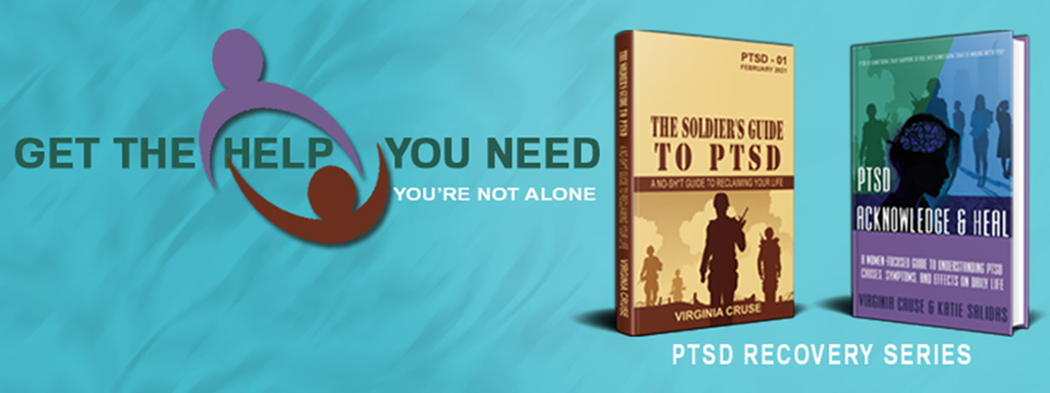
Get Your Copy of The Soldier's Guide to PTSDThe Soldier's PTSD Workbook

or pre-order Acknowledge and Heal: A Women-Focused Guide To Understanding PTSD

Friday, December 16, 2022

Holidays are Hard: Drinking Too Much

For some of us, the holidays get boozy. And I get it: 2022 has been really hard and holiday parties are an opportunity to let loose. 

But for those of us with a PTSD diagnosis, it never hurts to pause and consider if our drug and alcohol use is moving into problem territory. The reason for this is that PTSD is one of those disorders that always comes to the party with friends. The most common co-occurring disorders that I see with military Veterans who have PTSD are anxiety, depression, eating disorders, obsessive-compulsive disorder, and drug and alcohol abuse. 

Drug and alcohol abuse make a lot of sense in the context of PTSD. Criterion C of PTSD is avoidance, and drinking and drugging help us to avoid our feelings. Criterion D is all about changes in the way we think and feel, and alcohol and drugs can play a major role in this. Of course, alcohol is a big part of military culture. It is what it is. 

If you're wondering if your drinking has gone too far, you have nothing to lose by checking out a community recovery meeting online. One of the few good things to come out of the pandemic is that the recovery community (AA, NA, etc.) has largely shifted online and will probably stay this way. The barrier to entry has been completely removed, and our excuses for not going to a meeting are no longer valid. 

Having Alcoholics Anonymous (AA) and Narcotics Anonymous (NA) online means that instead of going to the chapel basement for a meeting, you can log into Zoom. The meeting you attend can be based in your city or in another country, so the likelihood that you're going to run into someone you know is significantly diminished. You can change your name in a Zoom room, and put up a photo rather than using your camera. 

I understand why people don't like 12-step programs. There are horrible meetings and miserable sponsors. There are also great meetings and highly supportive sponsors. Another perk of Zoom is that if you don't like the meeting you're in, you can click out of it; you can leave when you want to.

If you've been on the fence about going to an AA or NA program, now is the time to pull the trigger. Do a Google search for AA online or NA online to find a meeting. 

One thing to know about 12-step meetings is that when a meeting says it is closed that means that it is not welcoming students, clinicians, or family members. This means that if you have a desire to stop drinking or stop using, you are welcome to a closed meeting. This is known as the "third tradition," and it's incredibly important. 

Has recovery worked for you? We value your feedback and ideas! Reach out on our Community Facebook Page!

*****

If you believe change is possible, you want to change, and you are willing to do the work, you absolutely CAN get your life back.”

Get your copy of The Soldier's Guide to PTSDThe Soldier's Workbook

or Acknowledge & Heal, A Women's-Focused Guide to PTSD

Sunday, December 11, 2022

The 11th: Buddy Check Day


The 11th day of each month is Buddy Check Day reminding us to check in with other veterans. By getting in touch with others, we can enjoy camaraderie, check on each other’s well-being, and maybe even connect another veteran with a service they can use.

Buddy Check can be as simple as picking up the phone, talking, texting, or visiting.

Buddy Check Day is a great opportunity for veterans to connect with each other, and for other community members to reach out and connect with veterans.

It promotes camaraderie and connectedness. It also serves as an opportunity to educate folks on issues that are relevant to veterans across Texas and to educate folks on the services that are available to veterans.

We value your feedback and ideas! Reach out on our Community Facebook Page!

*****

If you believe change is possible, you want to change, and you are willing to do the work, you absolutely CAN get your life back.”

Get your copy of The Soldier's Guide to PTSDThe Soldier's Workbook

or Acknowledge & Heal, A Women's-Focused Guide to PTSD