Wednesday, May 18, 2022

A New Resource: The Soldier's PTSD Workbook


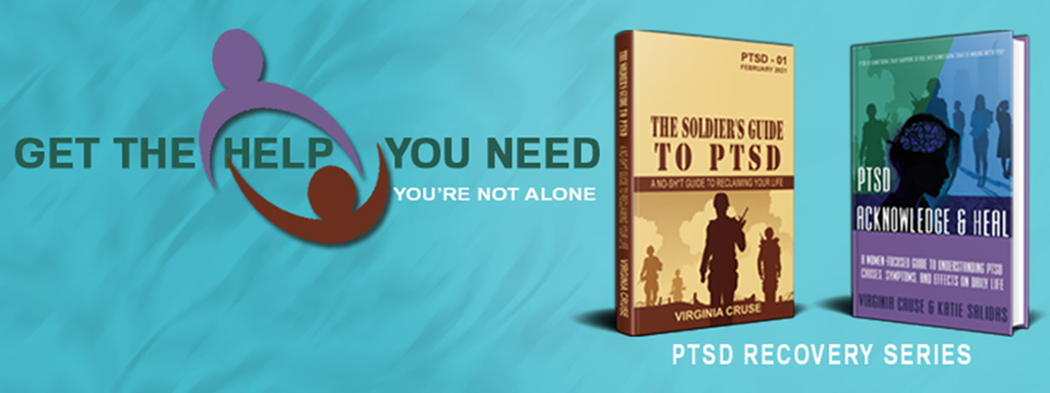
It's our joy to share with you our newest tool for reclaiming our lives from PTSD: The Soldier's PTSD Workbook is available now and perfect for groups and book clubs.

PTSD and Moral Injury are soul damaging. Trauma warps our fundamental belief systems—beliefs about ourselves, others, and the world—leaving us in a constant state of uncertainty and self-doubt.

Your life is at stake, my friend, and I'm not going to beat around the bush with fancy euphemisms and positive affirmations. 
I know how serious PTSD is.

But, before we get started, we have to have an honest conversation with ourselves. We have to be willing to take that first step.
Do you believe change is possible?
Do you want to change?

Many people who are suffering from Moral Injury or PTSD often feel they don't 
deserve to get better. This is toxic shame.
Let me tell you a little secret:
you deserve to heal!
It’s 100% okay not to feel all-in right now.

Let me ask you this instead.
Is it possible that you are stronger than you think?

Using this workbook, you will be able to identify how PTSD and Moral Injury have disrupted your life.

  • Trauma and Triggers
  • Flashbacks and Hallucinations
  • Substance Abuse and Alcoholism
  • Irritable Behavior and Angry Outbursts
  • Shame, Self-Loathing, and Self-Destructive Behavior
  • Avoidance
  • Lack of Empathy and Relationship Breakdowns


We're also going to cover the top three evidence-based treatment options you'll want to ask for by name.

Incorporating information from 
The Soldier’s Guide to PTSD, this workbook does not waste time cutting through the bull and getting down to brass tacks. Told in the voice of a Soldier-turned-therapist, it is a call to arms, offering facts, empathy, and direction, while urging Service Members to seek the right therapy, helping family members to understand the battlefield, and connecting civilians with the Warrior culture.

*****

“If you believe change is possible, you want to change, and you are willing to do the work, you absolutely CAN get your life back.”

Get your copy of The Soldier's Guide to PTSD, The Soldier's Workbook, 

or Acknowledge & Heal, A Women's-Focused Guide to PTSD

Friday, May 6, 2022

Trauma Reactions: Fight, Flight, and Freeze

Fight or flight. We hear this all the time, but freeze is the red-headed step-child of trauma. Fight, flight, and freeze are all normal neuro-biological responses to fear, but, if we don’t know this, we can feel guilty or angry or like we “let it happen” when our body freezes in the face of trauma. 

First, let’s wipe out the fantasy that we have a choice whether our body goes into fight, flight, or freeze - because that’s not a thing. When we’re in danger, our brain kicks into high gear and takes over to protect out life. You do not get a choice; in a split second your brain makes the choice for you. 

Think about those nature shows where lions are hunting gazelle-snacks. No gazelle is going to get its back up and whoop some lion’s ass, so he’s left with two choices: flight or freeze - and both of these are legit survival methods. The eye sees what is moving (“I’m up, they see me, I’m down”) so a lion may not notice the stock-still gazelle frozen right next to him. The folks who design military training know this and we go to great measures to train the freeze out of us. Live-fire exercises, rote memorization questioning techniques, fire and movement - we do this training over and over again so that our brain passes over freeze and jumps into habit under fire. But no one trains us how to get raped, or how to hold a buddy while they die, or how to respond when we see a detainee get schwacked. That is not a thing, my friends. There is no fighting back, there is no running away; we freeze. 

The degree of self-blame that comes with freeze is overwhelming. Sometimes we have this fantasy that, “if I didn’t freeze, everything would have been different,” or “if I didn’t freeze, I could have fought back.” 

I say this with love: it’s possible that you’re wrong. Freeze is not a choice; your brain took over and kept you alive.

Bottom line is that you deserve to get your life back, and there are therapy treatments (like Prolonged Exposure Therapy, Cognitive Processing Therapy, and EMDR) that are designed to help you with your symptoms. You can do this.

*****

“If you believe change is possible, you want to change, and you are willing to do the work, you absolutely CAN get your life back.”

Get your copy of The Soldier's Guide to PTSD, The Soldier's Workbook, 

or Acknowledge & Heal, A Women's-Focused Guide to PTSD

Friday, April 15, 2022

Hallucinations & Flashbacks - an Expected Part of PTSD

As a clinician, I want to be straight with you: I have never seen a case of PTSD without hallucinations. Never. And we need to talk about this openly because hallucinations make us feel legit crazy in a way other symptoms don’t. Ditto for flashbacks.

What’s a Flashback? So glad you asked because flashbacks are nothing like we see in the movies. That would be nice, but real flashbacks are way worse. They are like waking talking nightmares; intense episodes that happen while we’re fully awake. Just like an intruder, flashbacks strike suddenly and feel uncontrollable. Flashbacks are more like a nightmare than a memory because sometimes we can’t tell the difference between the flashback and reality. They’re vivid and feel unbelievably real. Unlike a movie clip, in flashbacks we can see, hear, taste, and smell things. It’s fucking terrifying because it is like the trauma is happening all over again in the moment. Those of us who experience flashbacks often feel like we’re going crazy. You’re not; this is a PTSD symptom. 

When we don’t know that hallucinations and flashbacks are an expected part of PTSD, we can feel like we’re going crazy and very seriously consider suicide - and this makes a lot of sense. We stop feeling like we can trust our brains and our bodies and we can literally start becoming frightened of ourselves and our reactions. We start asking ourselves, “what if I hurt my family?” or “what if I lose my shit in the Walmart?” I very much get you; it can feel like we’ll never come back from this. But you will.

For now, just let this sink in: hallucinations and flashbacks are a normal part of PTSD. Normal doesn’t mean that it’s okay, it just means that hallucinations and flashbacks are common and not unexpected. This is par for the course; you are not a freak. 

Bottom line is that we all deserve to recover from our PTSD symptoms and get our lives back. Get the help you need.

*****

“If you believe change is possible, you want to change, and you are willing to do the work, you absolutely CAN get your life back.”

Get your copy of The Soldier's Guide to PTSD, The Soldier's Workbook, 

or Acknowledge & Heal, A Women's-Focused Guide to PTSD