Sunday, December 24, 2023

The Annual Boundaries Pep Talk: Because Homicide is Illegal


Okay, Team - here we go! It's our annual boundaries pep talk (because homicide is illegal). To keep us from acting our our murderous fantasies, let's get back to square one:

Toxic relationships feel awful and boundaries protect us. Good boundaries let the people around us know how we define what is acceptable or unacceptable. For people who have been through traumatic experiences, however, this task is a tough one. Experiencing trauma makes us feel unsafe, and can challenge our sense of self-worth, and lead us back to placating or maladaptive tendencies to avoid conflict. 

Healthy boundaries are the ultimate form of self-respect. They say to us and the world, “I deserve to be honored, respected, and valued.” Boundaries denote confidence. Since confidence is often one of the casualties of PTSD, we have to relearn (or maybe learn for the first time) how to make a healthy, reasonable boundary, how to maintain it, and what to do if someone chooses to ignore it. 

Making healthy boundaries seems like it should be easy and intuitive, but it definitely is not. Let’s start here:

Ground Rules

1. Healthy boundaries make healthy relationships.

There is no such thing as a healthy relationship without boundaries, whether it is a marriage relationship, a friend, colleagues, or the relationship you have with your children. Healthy boundaries say, “I deserve to be honored, respected, and valued” and this is important for any healthy interpersonal relationship. 

      2. People do not know our boundaries unless we state them clearly and succinctly.

Yes, in a perfect world, people “should” know how to act, but suffice it to say that not everyone is great at adulting. Some people do not know that racist comments are not okay. Some people do not understand that unsolicited touching is creepy. Let’s not waste time getting mad about what “should be.” Instead, let’s remember that half the people we meet are below average and common sense is not common. Boundaries are not intuitive. We must state our boundaries clearly and concisely - out loud - to other people.

3. Reasonable people respect reasonable boundaries.

The inherent problem with this is that not all people are reasonable. Sad news of the day: the world is full of psychopaths and assholes. When people choose to ignore reasonable boundaries, they are sometimes the former and usually the latter. The problem is not our boundary, it is their choice. 

      4. Our boundaries, their choice.

We create healthy boundaries, and we have absolutely no control over other people or how they act. When we state our healthy boundaries - out loud - clearly and concisely, other people then choose whether they want to respect our boundaries or not. 

*****

If you believe change is possible, you want to change, and you are willing to do the work, you absolutely CAN get your life back.”

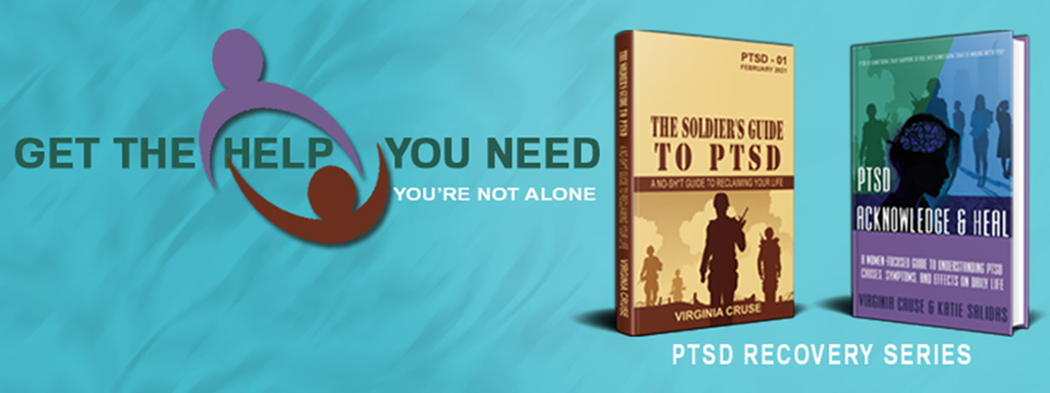
Get Your Copy of The Soldier's Guide to PTSDThe Soldier's PTSD Workbook

or pre-order Acknowledge and Heal: A Women-Focused Guide To Understanding PTSD

Sunday, December 17, 2023

Keeping Things in Perspective: Holiday Edition


There is a lot going on right now. For many of us (including me) it's one final push to the end of the semester, offices are under-staffed and over-worked, everything feels phenomenally expensive, and our "to do" lists are overwhelming. On top of this, the world is a bit... crazy.

How can we stay grounded in a crazy world and keep first things first? Let's start with perspective. 

My favorite version of the Serenity Prayer goes like this: "God, grant me the serenity to accept the things I cannot change, the courage to change the things I can, and the wisdom to know that that is me." 

It's a short prayer, but there is a lot packed in it. Serenity, acceptance, courage, and wisdom are simple concepts, but they are not easy. In order to find serenity, or peace, I have to practice recognizing what is and is not in my control (again, this is simple but not easy). 

In this overwhelming season, I have been reaching out and connecting with others - and it has helped. I can get stuck in my own head and lure myself into a self-condemnation spiral easily. I have a strong therapy group I am in and I work hard to surround myself with supportive people. My support network took a while to build, and here are some resources we can access from the comfort of our own homes right now:

Warmlines are peer-run listening lines staffed by people in mental health recovery themselves. Sometimes, we all need someone to listen but we know that a call to a crisis line may not be appropriate. Warmlines fill this gap. Here is a directory of warmlines across the U.S. 

12-step programs are powerful in terms of providing social support and accountability, and there are anonymous groups for any number of addictions. In addition to AA, NA, and Al-Anon, Codependents Anonymous (CoDA) is a powerful change agent, as are groups for Gambling and Survivors of Incest. Not everyone is a fan of the program, and I get it – there are plenty of lousy groups and crappy sponsors. There are also dynamic, inspiring groups and amazing sponsors. Since the pandemic, many groups have gone online and meetings are on Zoom. Here is the line to AA Online Intergroup for a list of online meetings. (The only requirement for AA membership is a desire to stop drinking).

Support groups bring together people who are going through similar experiences. Visitors are welcome to share as little or as much as they like. Support groups can be powerful because it reminds us that we are not alone and that others have also persevered through challenges. Support groups can help us feel less isolated, especially when we can relate to others in a similar situation. NAMI.org lists support groups for mental health issues and SAMHSA.gov lists many resources for alcohol and substance use, as well as mental health and other important topics. Survivors of Loved Ones' Suicides (SOLOS) is an especially powerful peer-led support group.

Online groups. Full disclosure: I have not fully leapt into the 90s in terms of keeping up with social media, but I am impressed at the amount of social support my clients have found available online in chat forums and social media groups. To find one, try using a search term like “online support group PTSD." 

F  Friend, this is a batty season for lots of folks - you are not alone. And what do you have to lose by trying one of the suggestions here?

How are you keeping first things first right now? We value your feedback and ideas! Reach out on our Community Facebook Page!

*****

If you believe change is possible, you want to change, and you are willing to do the work, you absolutely CAN get your life back.”

Get Your Copy of The Soldier's Guide to PTSDThe Soldier's PTSD Workbook

and Acknowledge and Heal: A Women-Focused Guide To Understanding PTSD


Sunday, December 10, 2023

Survive the Holidays: Guided Meditation


Holidays are hard. Full stop.

The triggers triggers this past year have been endless, and it is 100% okay to feel however you feel right now. Whether you’re feeling angry, anxious, cagey, or just done with 2023, it’s okay. 

Let’s take time to talk about ways to cope and try to get as close to “normal” as we can, whatever “normal” means.

Guided Meditation

I’m not getting all woo-woo on you. In my opinion, guided meditation is the single easiest thing we can do to self-adjust; it’s easy to do, easy to access resources (free on YouTube!), and takes as little as 5-10 minutes. We can do it in our car, on our work break, or before bed to unplug from a hectic day.

The purpose of guided meditation is to slow our minds down and relax, and it’s perfect for beginners who have never tried meditation or mindfulness. Guided meditation is a lot like listening to an audio book. A soothing voice tells us exactly what to visualize and how to wind down, and there is usually some relaxing music in the background. 

Rather than pushing intrusive thoughts away, guided meditation encourages our brains to replace those thoughts with something more relaxing and to stay anchored in the present moment. Guided meditation takes the guesswork out of the mechanics; all we have to do is follow the suggestions of the soothing voice. Sometimes this is guided breathing or visualizing a relaxing setting. It’s too easy.

It’s Free and Plentiful 

Guided meditation recordings used to be hard to find, but not so anymore. My go-to is YouTube: search for “guided meditation for relaxation” – or for sleep, or for anxiety, or for stress, or for anything you need in the moment. Take a look at the length of the recordings as they come up. Some are 5 minutes and some are 8 hours (to encourage sleep, for example). Give a listen to the recordings; they vary in terms of voice, music, and content. If you try one and hate it, there are dozens of others you can try. I have my favorites saved and use the YouTube app on my phone to access them wherever I roam. 

Help with Sleep

For me, guided meditation has been a godsend in terms of peaceful sleep. I have a tough time winding down my brain at the end of the day and regularly use guided meditation to help me put those racing thoughts in a drawer to open again tomorrow. 

In conclusion, guided meditation is too easy not to try. So give it a go and let me know what works for you.

Do you have a way to make the holidays feel less hectic? We value your feedback and ideas! Reach out on our Community Facebook Page!

*****

If you believe change is possible, you want to change, and you are willing to do the work, you absolutely CAN get your life back.”

Get your copy of The Soldier's Guide to PTSDThe Soldier's Workbook

or Acknowledge & Heal, A Women's-Focused Guide to PTSD