Saturday, January 15, 2022

How to Get a PTSD Diagnosis


I want to talk to you about how to get an official PTSD diagnosis.

As of this writing, the Diagnostic and Statistical Manual, Version 5, is the authoritative guide to the diagnosis of all mental disorders. It's a big purple book that says DSM-5 on the spine.

The version 5 came out in 2013, and this is important for us to know in case we got a diagnosis prior to 2013. The clinical definition of PTSD changed significantly from version 4 to version 5. So if you got a diagnosis before 2013 or had your VA compensation and pension exam prior to 2013, it may be time for a do-over.

In order to get a PTSD diagnosis, we have to have a no kidding, come-to-Jesus sit down with a mental health professional. It takes time and effort. We have to choose to be radically authentic with the clinician and the clinician has to know their DSM-5.

Unfortunately, there are a lot of misdiagnoses out there. 

It is important that we know our diagnosis and are symptoms better than anyone else, to include our therapist, our doctors, or our chain of command. The reason for this is that no one is going to be more invested in our recovery than we are. 

We created a Quick Start Guide to help understand our PTSD symptoms and advocate for evidence-based treatment. 

*****

“If you believe change is possible, you want to change, and you are willing to do the work, you absolutely CAN get your life back.”

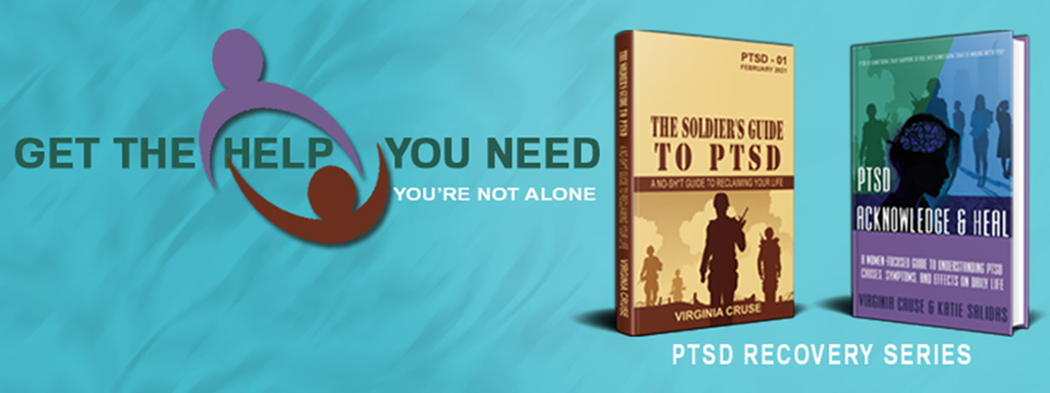
Get your copy of The Soldier's Guide to PTSD, The Soldier's Workbook, 

or Acknowledge & Heal, A Women's-Focused Guide to PTSD

Saturday, January 1, 2022

Trauma Comparison is Shitty

 I want to talk to you for a minute about trauma comparison. This is when we "one-up" each other's trauma experience. For example, "I went to Iraq and Afghanistan," or "I got blown up twice! "

One-upsmanship is not something I hear among survivors of other kinds of trauma, probably because it's sincerely messed up to engage in this type of comparison. It would be unreal if, when working with survivors of domestic violence for example, one survivor turned to another and said, "you think you had it bad? I went to the hospital three times!" I hope we can agree that no one is trying to win the trauma lottery here.

Saying "my trauma is more traumatic than your trauma" is unhelpful and, unfortunately, I hear this among military members and Veterans. 

I want to be clear: I don't think there is any ill will behind trauma comparison. We don't know what we don't know. 

So many times when we finally get the courage up to get help, we are not believed, or we are dismissed outright. The first time I poured my heart out to a psychiatrist, a male colonel at a large military treatment facility, he straight-up told me that he could not help me because I was "lying." To clarify, he stated, "we all know women don't serve in combat." 

This was in 2008. I was at my absolute worst with my PTSD symptoms, I was drinking daily, and I was acutely suicidal. This licensed mental health professional and field-grade military officer belittled me, dismissed me, and labeled me with a personality disorder. He kicked me while I was down. I reported it, and no one with any power chose to do anything about it. 

Chose. To. Do. Anything. About. It.

I'm not mentioning this for pity, but to promote awareness. So many of us who share our experiences are just not believed — by our doctors, our chains of command, by family members, and even our fellow service members — and it hurts like hell. 

Trauma comparison is shitty. It keeps other people from getting the help that they deserve because it belittles and diminishes their experience. What is shittier is choosing not to believe someone who survives trauma. 

Trauma comparison is an easy correction we can make. But choosing not to believe someone when they share their trauma experience makes you an asshole. 

*****

“If you believe change is possible, you want to change, and you are willing to do the work, you absolutely CAN get your life back.”

Get your copy of The Soldier's Guide to PTSD, The Soldier's Workbook, 

or Acknowledge & Heal, A Women's-Focused Guide to PTSD


Wednesday, December 15, 2021

Is PTSD Only for Military Members?


A rumor I often hear is that PTSD is only for military members, combat Veterans, or trigger pullers. Sometimes, I'll hear people say, "I don't deserve to have PTSD."

Many civilians believe that only military members can suffer from PTSD, and within the ranks many service members believe that only ops folks can have PTSD.

For military members, some of the things I hear time and again are, "I can't have PTSD because I never left the FOB," "I can't have PTSD because I never fired my weapon,"" or I can't have PTSD because my convoy never got schwacked."

So that's not a thing; that is fundamentally not how PTSD works. This is just a quick blog post, but suffice to say that your body and brain reacts the same way every single time your convoy leaves the wire, whether you get schwacked or not. You don't have to be a trigger pulling, pipe hitting, mother-trucker for PTSD to whoop your ass.

There's also the idea that PTSD is reserved for people who have "earned it." This often sounds like, "I don't deserve to have PTSD," "at least I came home in one piece," or "my trauma was a combat related."

Let's have some real talk for a minute. I don't deserve to have the flu. I'm a really nice person and I help people. The flu doesn't care about that. No one deserves to have malaria or HIV or schizophrenia, but we don't get a choice. PTSD is same-same.

Let's work together to dispel rumors about PTSD and encourage others to get the help they need to reclaim their lives.

*****

“If you believe change is possible, you want to change, and you are willing to do the work, you absolutely CAN get your life back.”

Get your copy of The Soldier's Guide to PTSD, The Soldier's Workbook, 

or Acknowledge & Heal, A Women's-Focused Guide to PTSD